Murchison Falls National Park holds more than 450 recorded bird species, a number that puts it among the richest birding destinations in East Africa, and most of that richness comes from the same split that defines the rest of the park: open savanna to the north, dense forest to the south, and the river running between them drawing species that belong to neither.
The forest side holds the birdlife most visitors expect less of: species tied to deep cover and mahogany canopy, moving through country that couldn't be more different from the open grassland twenty minutes away. The savanna and riverine side holds waterbirds working the Nile's shallows in numbers to match the hippos they share the water with.
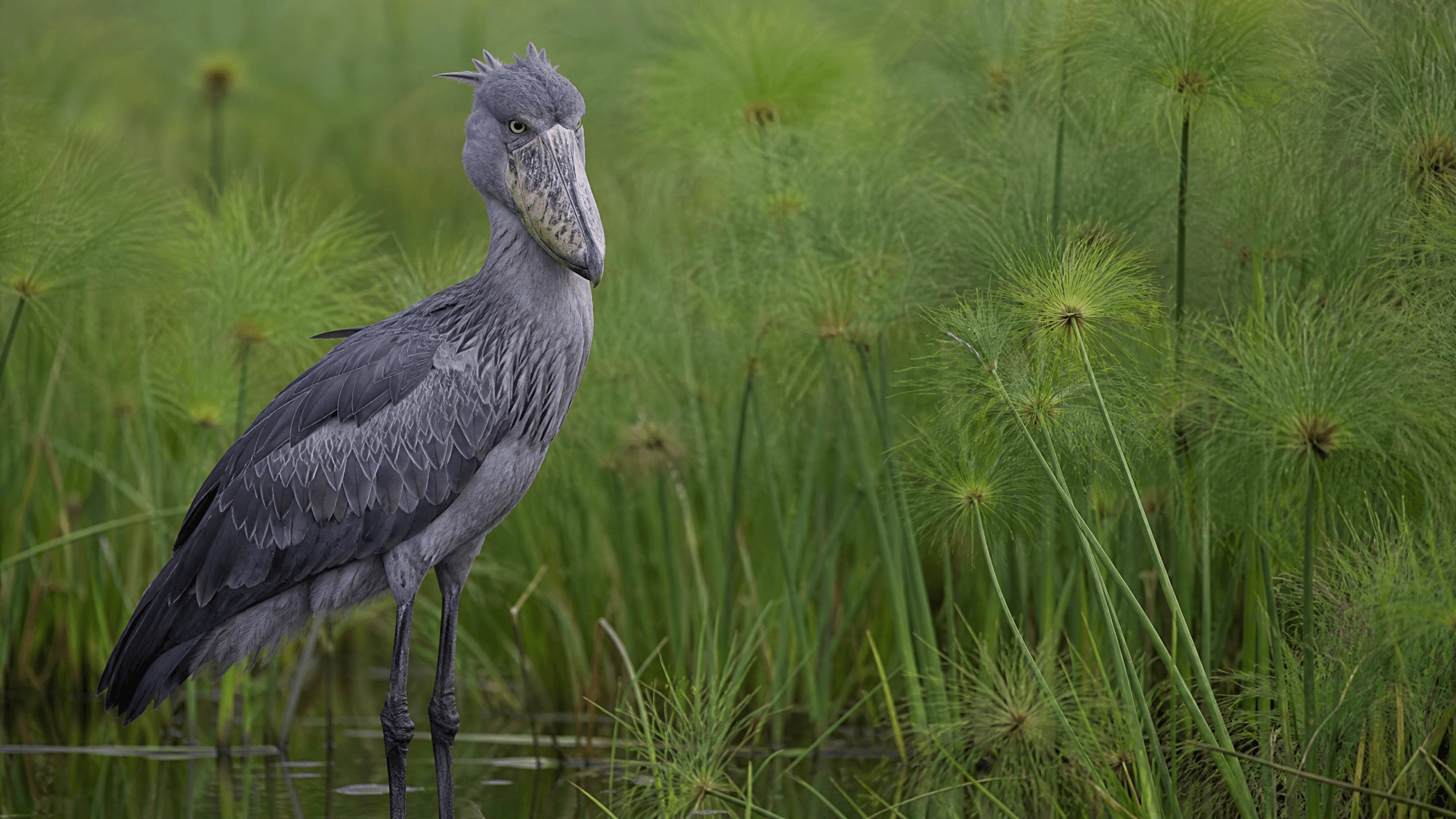
And then there's the shoebill. Tall, gray, prehistoric in outline, with a bill built like a Dutch clog and an expression that unsettles as much as it fascinates, the shoebill stork is one of the most sought-after birds on the entire continent, and Murchison Falls is genuinely one of the better places in East Africa to find one. It favors papyrus swamp, particularly near where the Victoria Nile opens into Lake Albert, and it hunts by standing motionless for stretches of time that test a birder's patience more than almost anything else in the park, before striking with a speed entirely at odds with how long it just spent doing nothing at all.
Seeing one isn't guaranteed on any single visit, which is precisely why serious birders treat a confirmed shoebill sighting the way anglers treat a genuine trophy: rare enough to be worth the wait, and unforgettable enough to justify it.
Read more about the Two Banks, Two Worlds section on the Destination page, and book a guided nature walk or boat safari through the Experiences page.