
Destination Guide
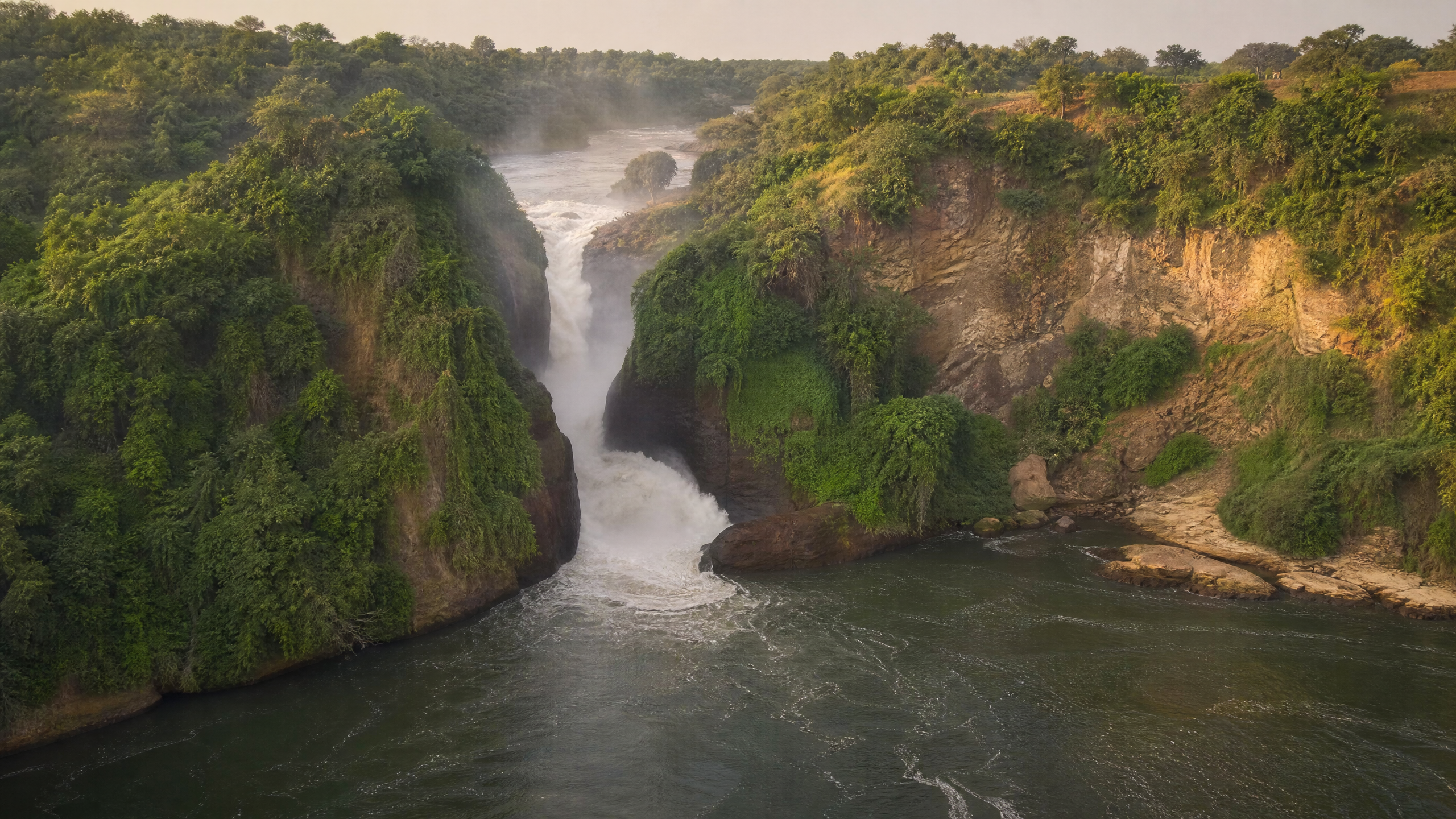
Murchison Falls
Northern Uganda, where the Nile is forced through a gap seven metres wide and dropped forty-three metres into the gorge below, opening onto some of the richest wildlife country in East Africa.
The Place
Murchison Falls National Park
Murchison Falls National Park runs some 3,840 square kilometers across northern Uganda, split down the middle by the Nile on its way west to Lake Albert. The Banyoro and Batooro, who have lived along these shores for generations, call the lake Mwitanzige, the locust killer, after a local account of a swarm that tried to cross the water and never once got to the other side. The British explorer Samuel Baker renamed it Lake Albert in 1864 for Prince Albert, and the name stuck on maps everywhere except here, where the older name is still what gets spoken out loud.
The falls carry the same layered history, just compressed into a single spot. Baker named them Murchison Falls that same year, after the president of the Royal Geographical Society back in London, a man who never once stood where the spray hits your face. Locally, they’re still known as Kabalega Falls, after Omukama Kabalega, the nineteenth-century king of Bunyoro who met British colonial rule with open resistance rather than accommodation. Guides and staff here move between both names without much ceremony, the way anyone does with a place they actually know rather than one they’re only passing through.
The dry seasons, December to February and June to September, bring the grass down low and push the animals out into open ground, the clearest window for actually seeing what lives here. The wetter months slow the roads to a crawl and thicken the bush past what a vehicle wants to handle, but they green the whole park in a way the dry months simply can't manage.
Two Banks, Two Worlds
Two Banks, Two Worlds
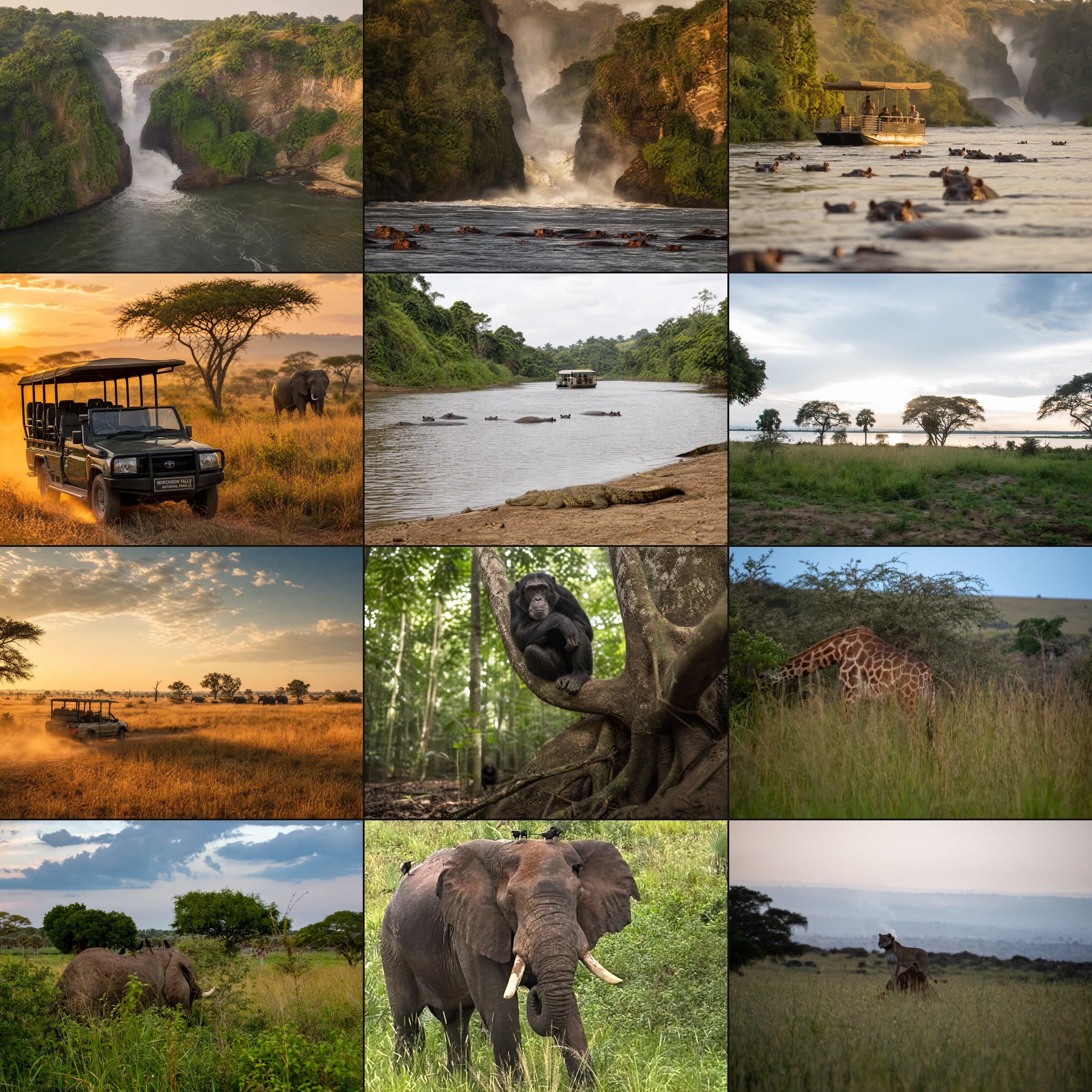
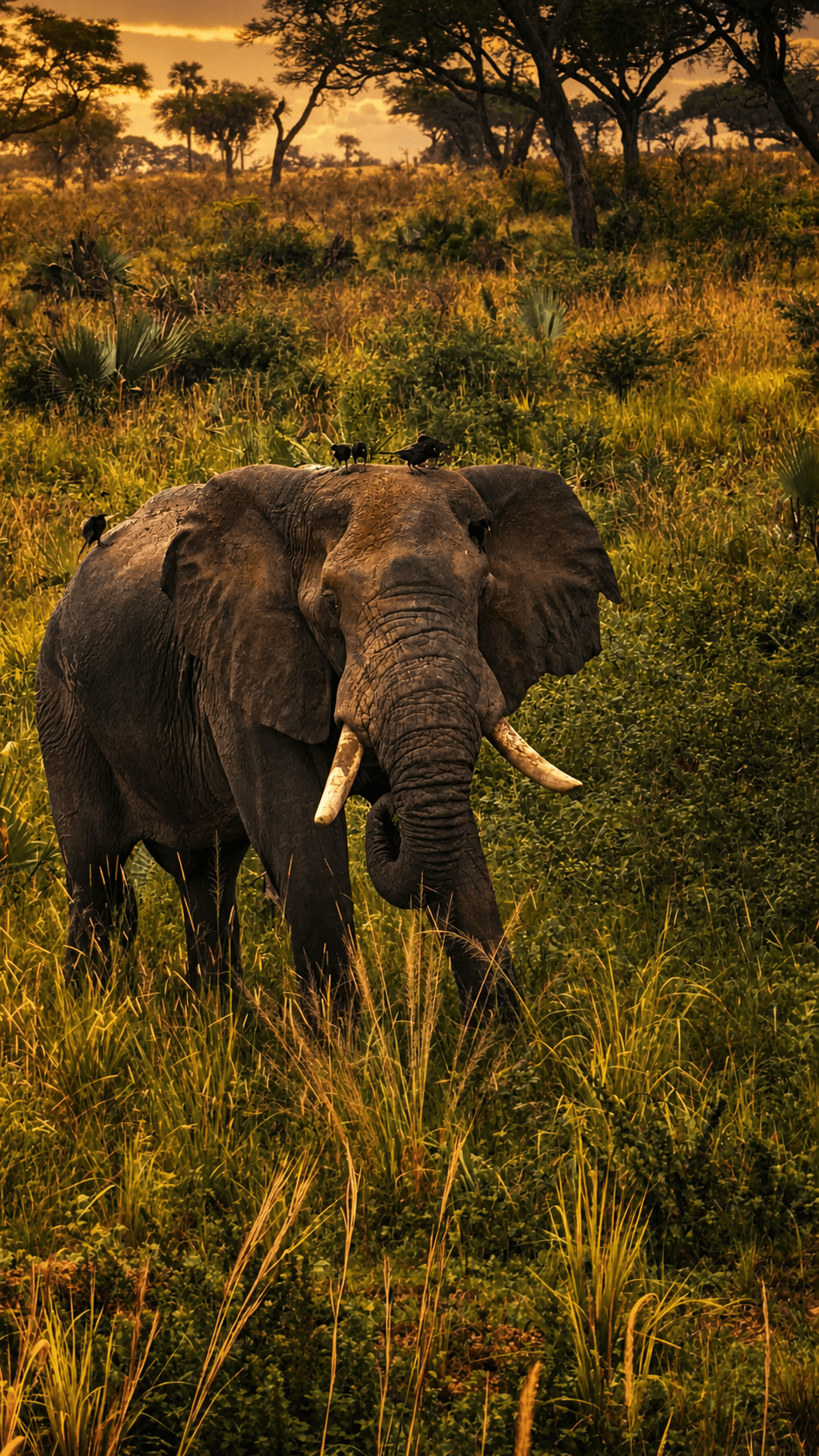
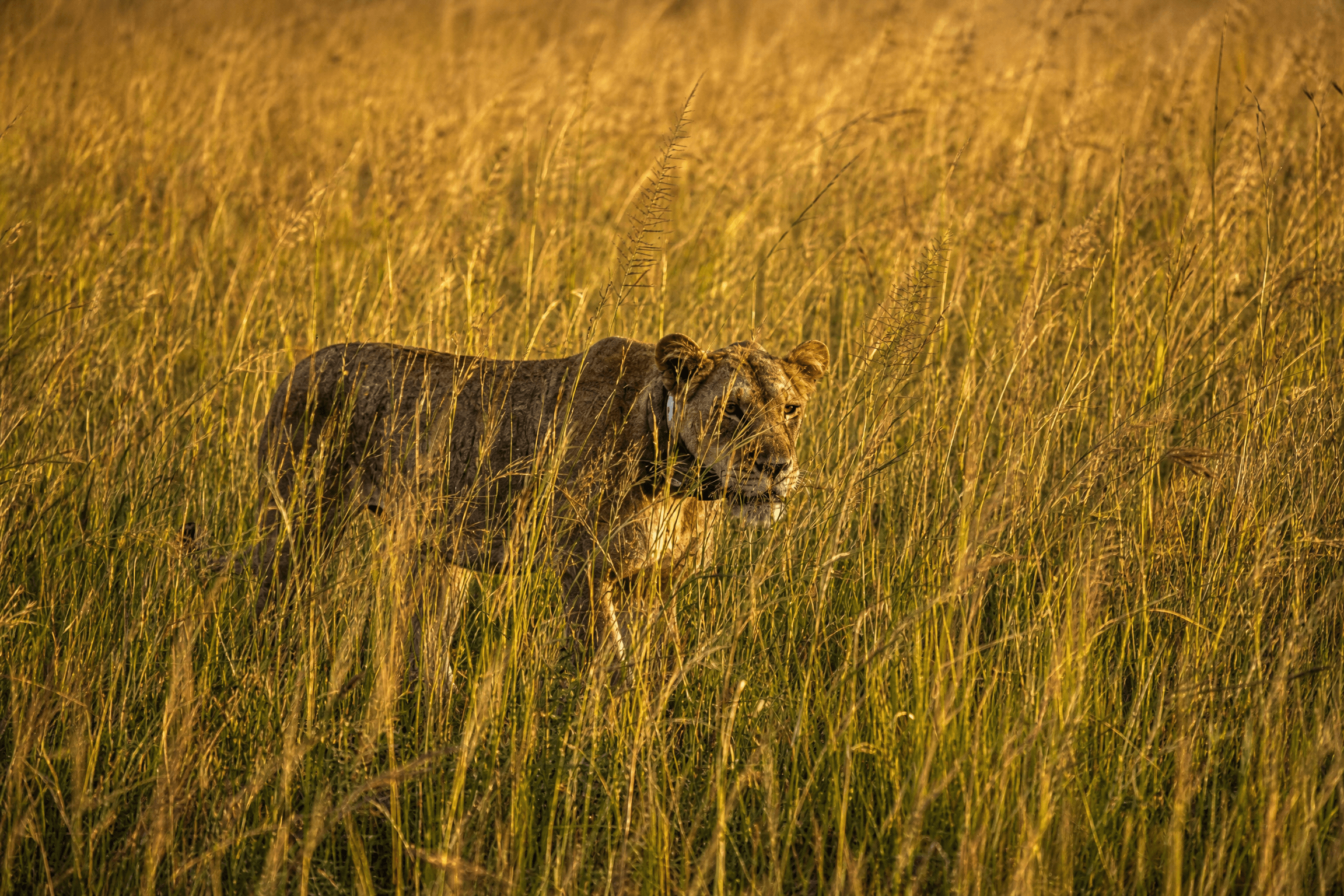
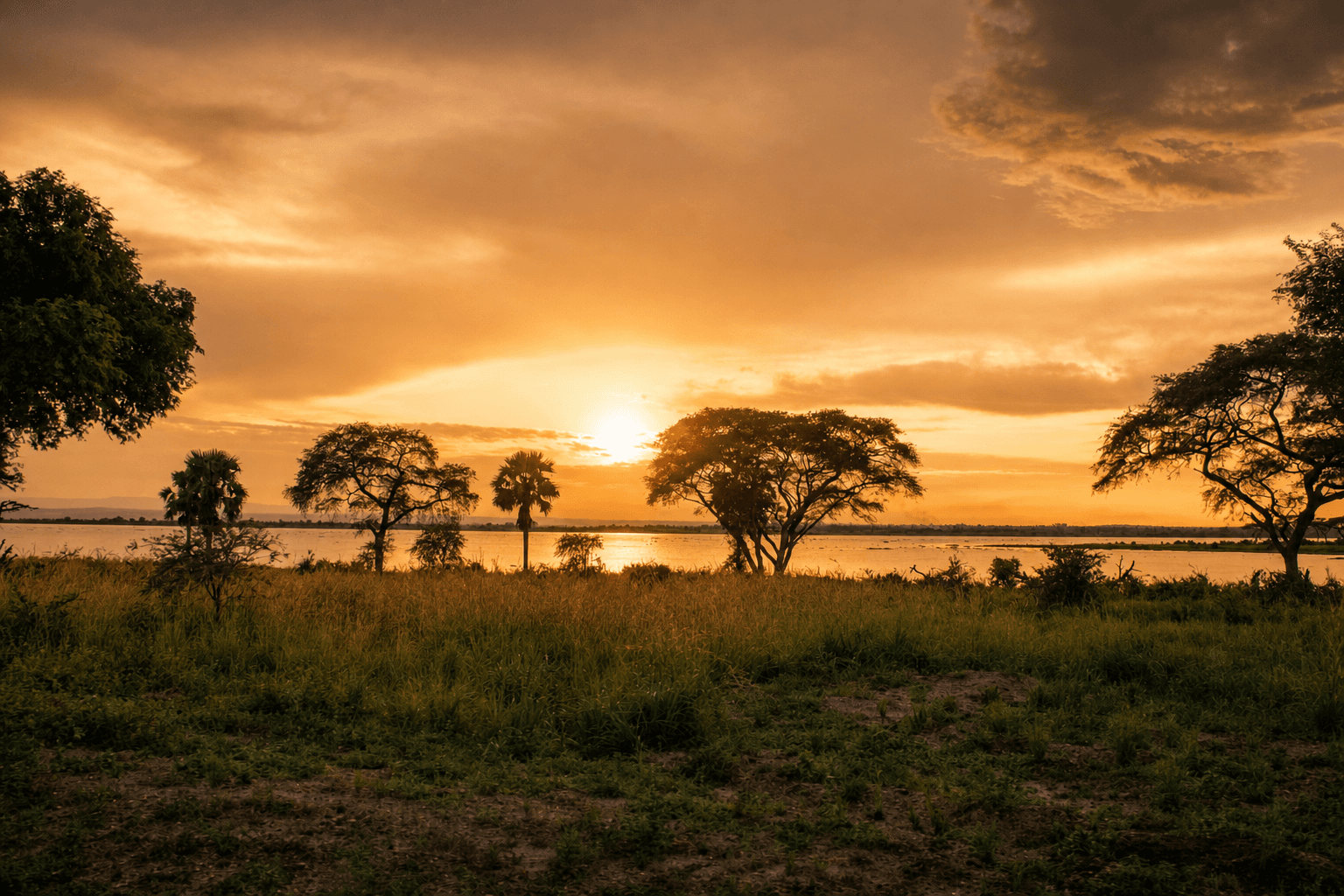
North of the river, the land opens straight into savanna, pale gold through the dry months and holding lion, leopard, elephant, and buffalo alongside Uganda kob, Jackson’s hartebeest, and oribi. The Nile itself carries one of the densest hippo populations on the continent, its banks lined with Nile crocodiles doing their best impression of driftwood in the sun, the shallows worked over by waterbirds that never seem to run out of patience.
South of the river, the ground changes its mind entirely. Forest closes in, cooler and darker underfoot, home to chimpanzees, red-tailed monkeys, and a different register of birdlife altogether. This is one of the better places in East Africa to find the shoebill stork, a bird stranger and more sought-after than almost anything else on the continent, capable of standing motionless in the swamp for longer than seems reasonable before it decides to move at all.
Between the two banks, the park holds more than 450 recorded bird species, one of the richest counts anywhere in the region.
Getting There
Getting There
By Air
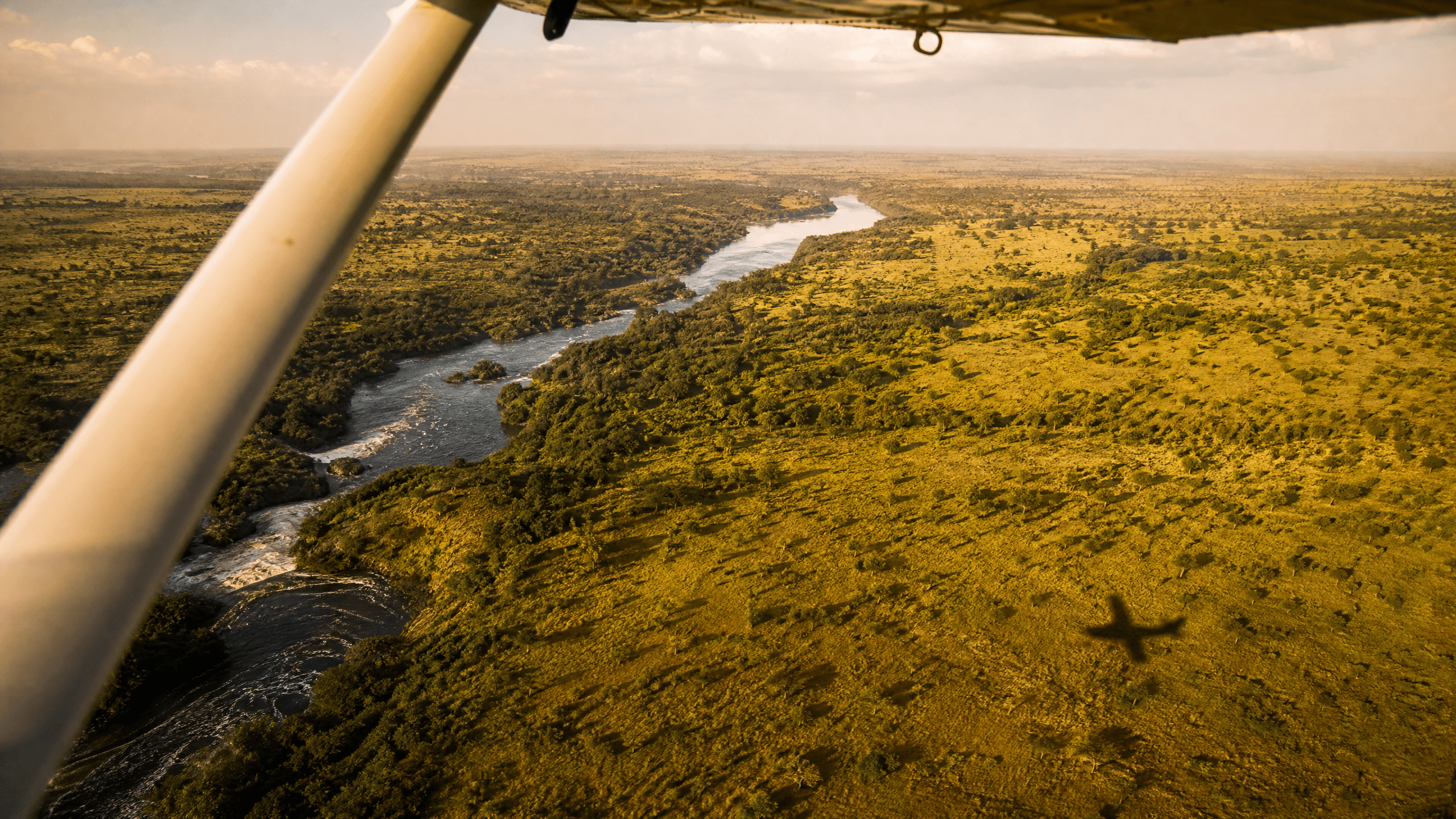
Charter flights from Entebbe or Kampala cut the whole journey down to about an hour, landing at Pakuba Airstrip close enough to the lodge that the flight practically counts as the transfer.
By Road
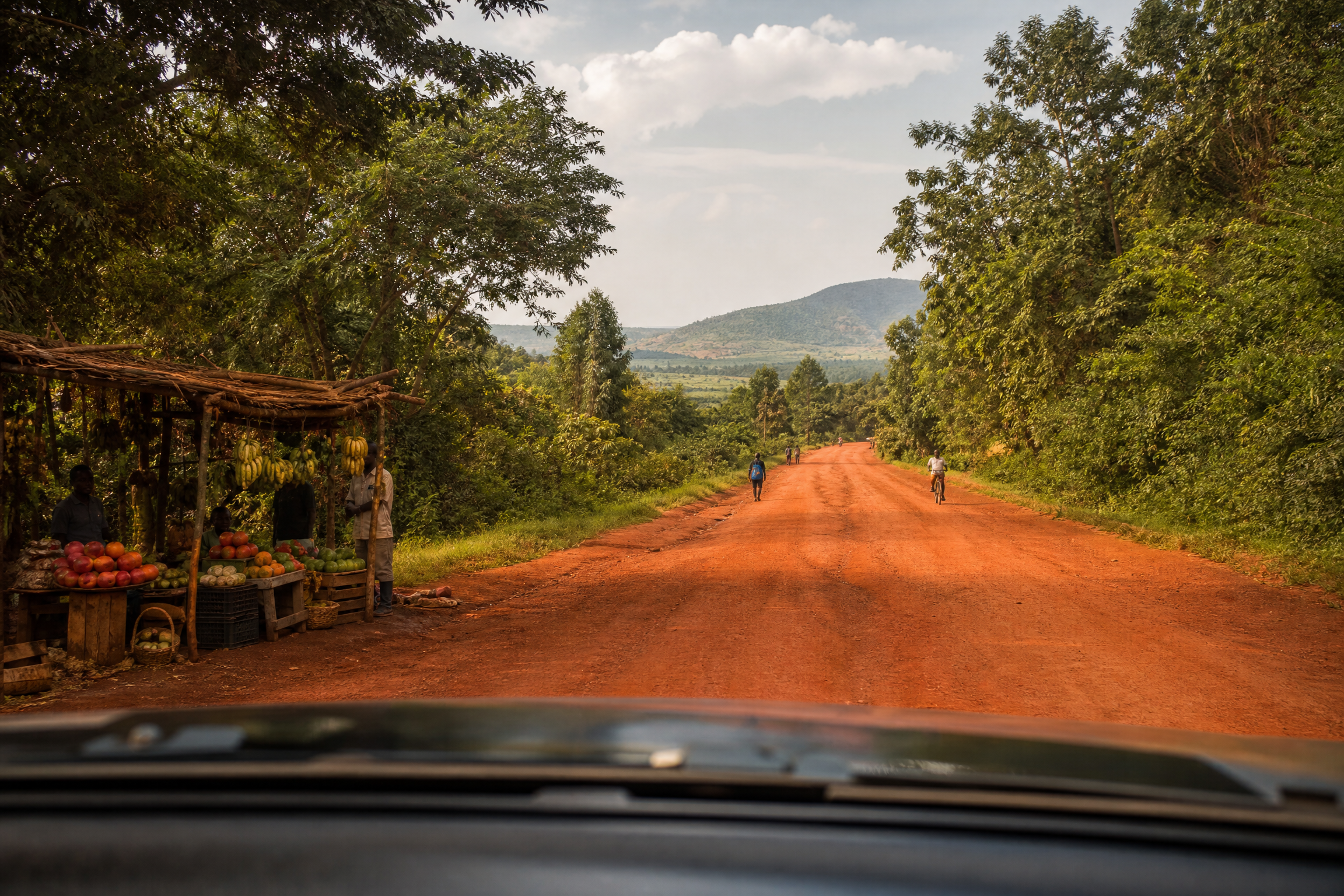
Kampala sits roughly 305 kilometers south of the park, a five-to-six-hour drive that hands you a genuine cross-section of the country before you ever reach the gate.
At a Glance
Practical Information
- Country
- Uganda, East Africa
- Park Size
- Approximately 3,840 km²
- Nearest City
- Entebbe, approximately 320 km south by road
- Nearest Airstrip
- Pakuba Airstrip, charter flights from Entebbe and Kampala
- Best Months
- December to February and June to September (dry seasons)
- Wildlife
- Lion, leopard, elephant, buffalo, hippo, Nile crocodile, Rothschild’s giraffe, and more than 450 bird species including the shoebill stork
- Health and Safety
- Malaria risk present. Prophylaxis recommended; consult your doctor before travel.
- Visa
- Most nationalities require a visa. East Africa Tourist Visa available online.
- Currency
- Ugandan Shilling (UGX). USD widely accepted at lodges.
- Time Zone
- East Africa Time (EAT), UTC+3
Murchison Falls is easiest to understand in person.
Tell us your dates, and we’ll build the rest of the stay around them.
Check Availability